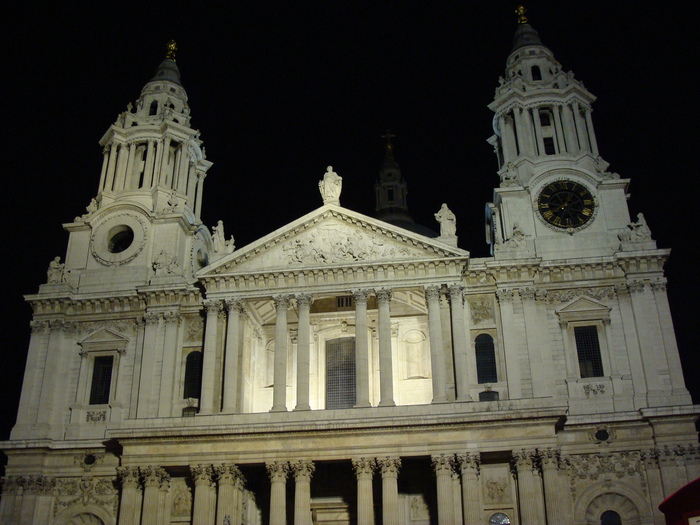
The majestic St. Paul's Cathedral was built by Christopher
Wren between 1675 and 1711. It
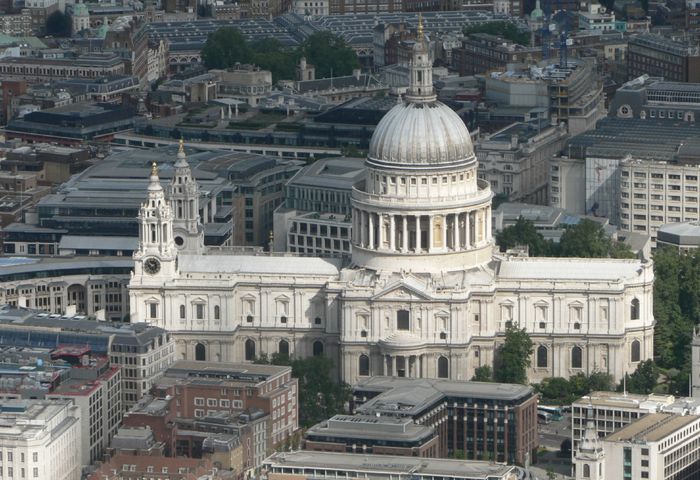
is one of Europe's largest cathedrals and its dome is only exceeded in size by
that of the St. Peter's Basilica in Rome.
St. Paul's
Cathedral has had an eventful history. Five different churches were
built at this site. The first church, dedicated to the apostle Paul, dates back
to 604 AD, when King Ethelbert of Kent built a wooden church on the summit of
one of London's hills for Mellitus, Bishop of the East Saxons. Being made of
wood it didn't stand a chance and was eventually burnt down.
It was rebuilt in stone but that didn't work either as it was destroyed in a
Viking invasion. When the Saxons used wood again on the third church, it was
doomed to be destroyed by fire in 1087 again!
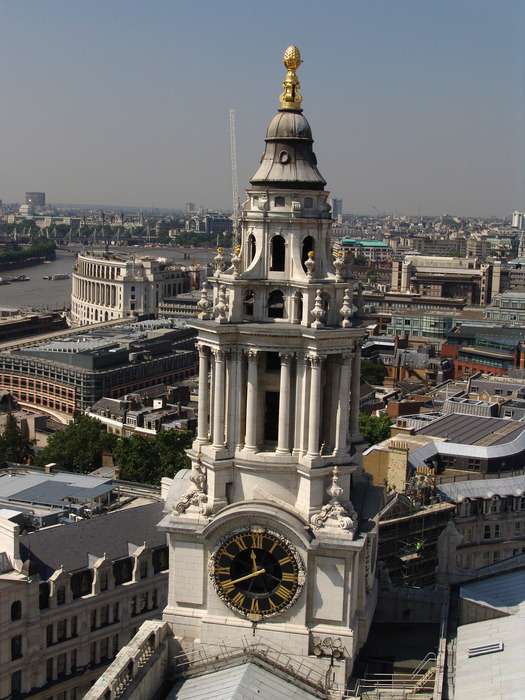
The clock tower on the West Side houses the bell known as
Great Paul. At three metres in diameter, it is the heaviest swinging bell in
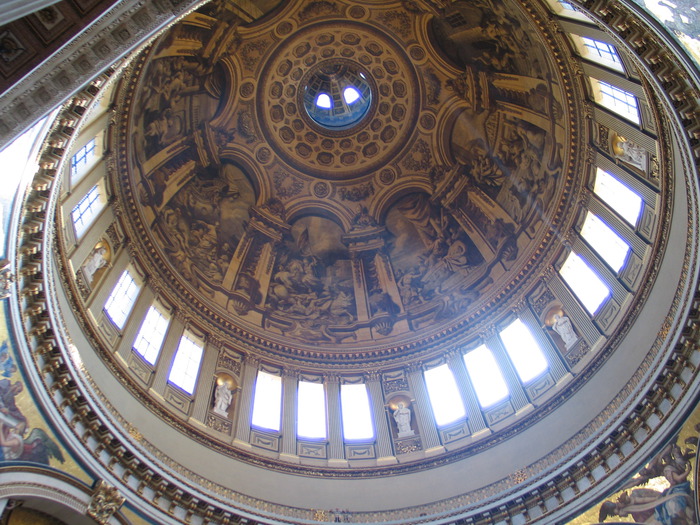
the country. Of course there is the famous dome and the cross on top is 365
feet from the ground. It is the second largest cathedral dome in the world. Only
St Paul's in Rome is bigger.
During the Second
World War, the Cathedral of St. Paul became a great symbol of the British
faith. After each bombardment, the cathedral still towered over the city, it
received only slight damage to the northern transept and the chapel behind the
main chancel, which were soon restored, and a new altar was built
in memory of the victims.
The most important
state ceremonies were held in St. Paul’s Cathedral in London: thanksgiving for
the end of the Napoleon’s wars, the funeral of the Duke Wellington, the wedding
of Prince Charles and Diana, the anniversary prayers of thanks for the life of
the Queen Mother.
The Whisper Gallery is
probably the most famous landmark of St. Paul’s Cathedral. After going up 259
steps to the gallery in the lower part of the dome, you can make sure of the
special acoustics of the walls, reflecting even a whisper, due to which the
words are clearly heard in the other side of the gallery. Even higher - 560
steps – is the Golden Gallery at a height of 85 meters, showing a panoramic
view of London.
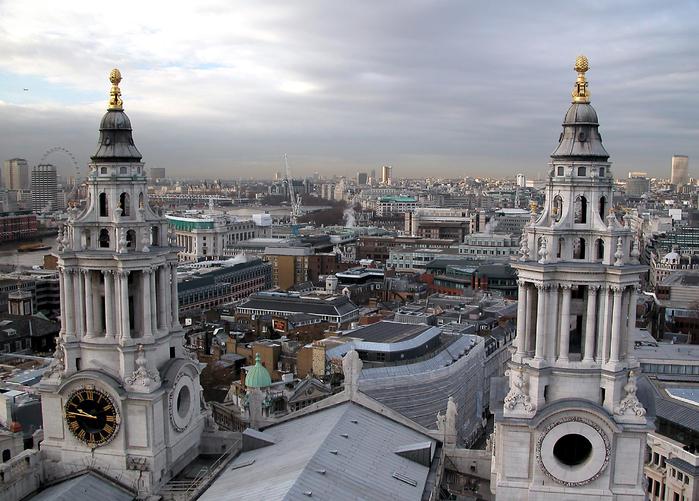 Usually, visitors are
advised to climb the Whispering gallery in order to try the acoustic phenomenon
that gave the name of the gallery. From there they pass into the external
gallery called the Stone Gallery, which overlooks the whole London. The most
courageous can continue to climb to the Golden Gallery and, finally, enter the
Golden Ball, on which a gilded cross rises. St. Paul's Cathedral is the tomb of
nearly two hundred of the most famous British citizens. This tradition
originates from the previous cathedrals - in the first and second cathedrals
Anglo-Saxon kings were buried. Christopher Wren was the first to have an honor to be buried in the St. Paul’s Cathedral. There is no monument on his
grave, and there is given only an epitaph in Latin: Lector, si monumentum
requiris, circumspice (“Reader, if you are looking for a monument - just look
around”).
Usually, visitors are
advised to climb the Whispering gallery in order to try the acoustic phenomenon
that gave the name of the gallery. From there they pass into the external
gallery called the Stone Gallery, which overlooks the whole London. The most
courageous can continue to climb to the Golden Gallery and, finally, enter the
Golden Ball, on which a gilded cross rises. St. Paul's Cathedral is the tomb of
nearly two hundred of the most famous British citizens. This tradition
originates from the previous cathedrals - in the first and second cathedrals
Anglo-Saxon kings were buried. Christopher Wren was the first to have an honor to be buried in the St. Paul’s Cathedral. There is no monument on his
grave, and there is given only an epitaph in Latin: Lector, si monumentum
requiris, circumspice (“Reader, if you are looking for a monument - just look
around”).

Комментариев нет:
Отправить комментарий