 The Palace of Westminster is the meeting place of the House of Commons and the House of Lords, the two houses of the Parliament of the United Kingdom. Commonly known as the Houses of Parliament after its occupants, the Palace lies on the north bank of the River Thames in the City of Westminster, in central London, England.
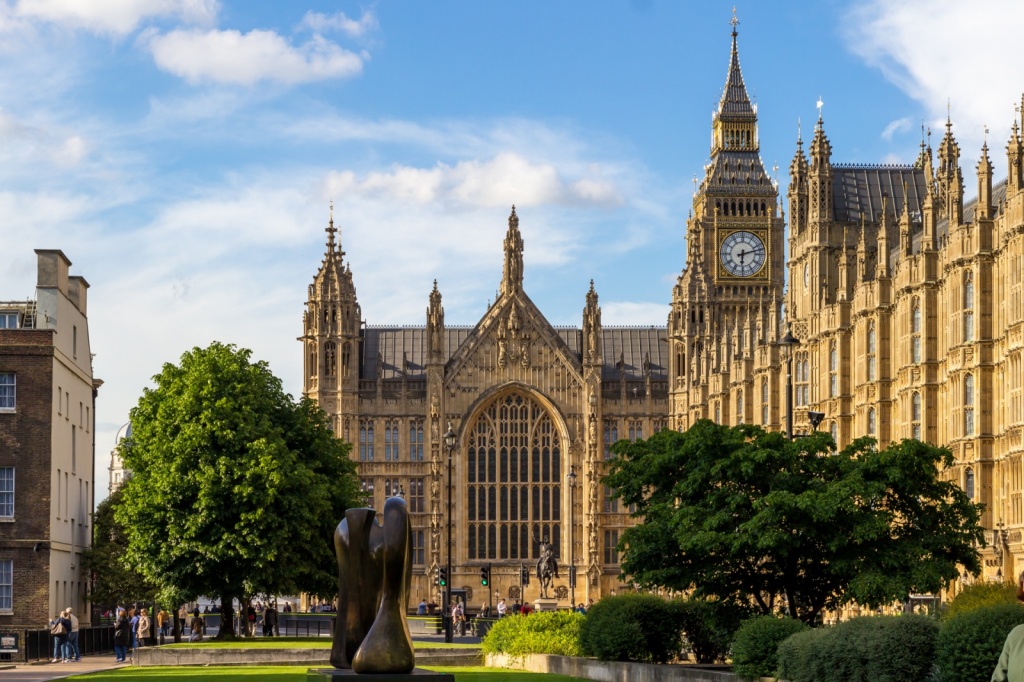 Initially, until 1529, it served as the capital residence of the English kings. After the fire on October 16, 1834, the Palace was rebuilt according to the neo-Gothic project of Charles Barry OI U. N. Pugina. From the medieval Palace of Westminster left the reception hall (1097), the seat of the courts of Westminster, and the Tower of jewels (built to hold the Treasury of Edward III). At the beginning of the reign of Henry VIII, and in 1512, in the Royal part of the Palace there was a fire. In 1534, Henry VIII Acquired cardinal Thomas Wolsidvorets, renamed it Whitehall and made it his main residence. Since that time, the Palace of Westminster became the Parliament building. An Important ceremony took place the Painted chamber, in the House of lords was going to Queen's House (Queen's house), then, with the increase in the number of peers in the XVIII century, in the larger White chamber (White chamber). Since 1547 the house of Commons has gathered in the chapel of St. Stephen. In the XVIII and XIX centuries the Palace was updated several times, in 1799-1801 years under.
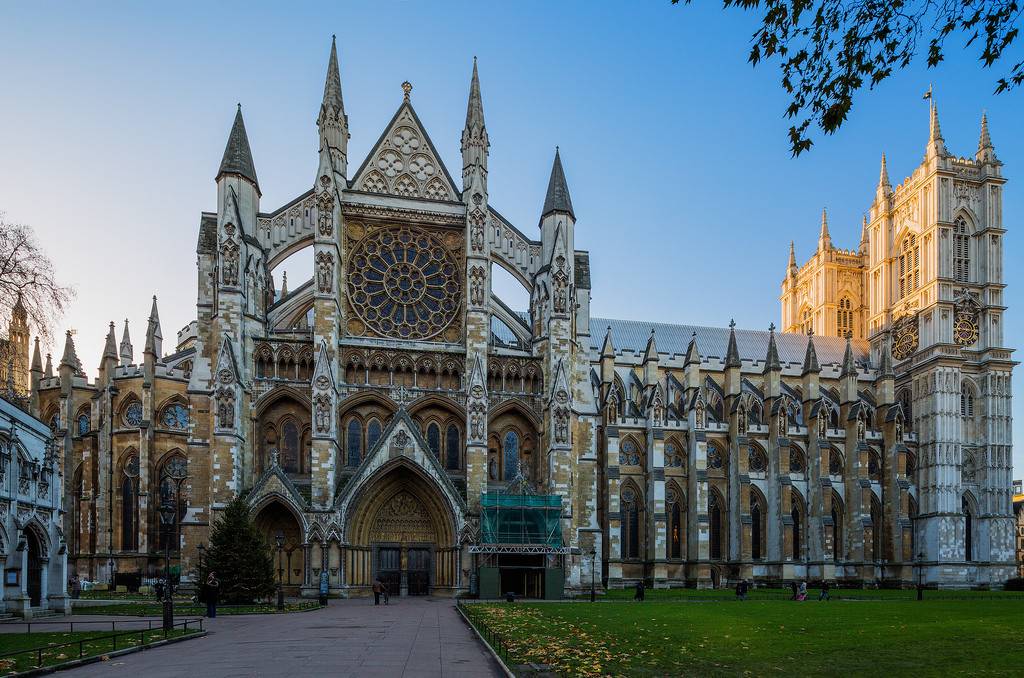 Westminster Abbey was built intermittently from 1245 to 1745, although the first mention of the Church on this site belong to VII-X centuries. The traditional place of coronation and burial of the monarchs of great Britain. Together with the nearby Palace of Westminster and the Church of St. Margaret, the Abbey was designated a world heritage site in 1987. The main building of the Church has the shape of a cross, or rather, is a Church with a transept
 The main entrance to the Church is a large Northern door, through which visitors enter the Northern transept. From there, turn left and find yourself in the Eastern part of the Church, deambulatorio where there are several chapels (or chapels), the largest of these is Notre-Dame chapel of Henry VII. Most of the southern transept is occupied by the poets ' Corner; there is also a large round rosette window, designed by sir James Thornhill, which depicts the eleven apostles. Construction of the modern non-Westminster Abbey lasted from 1376 to 1517, most of the work was carried out under the direction of architect Henry Yevel. Its design has been applied to the flying buttresses (exterior arches), which allowed to raise the roof of the nave to a height of 31 meters, the highest nave in England.
 One of the most recognizable elements of the design of the nave — stained glass window in the Western window of William price, which was installed in 1735. It depicts Abraham, Isaac, James, and 14 prophets, with the coats of arms of king Sabert, Elizabeth I, George II, rector of Wilcox and the city of Westminster beneath them. Under the stained glass window (since 1920) is the tomb of the Unknown soldier, dedicated to those killed in the First world war, to her lay wreaths all the heads of state, making an official visit to the UK. In 1722-45 years was erected the West tower of the Abbey under the guidance of architect Nicholas Hawksmoor and according to the project Christopher Wren. In the XIX century the Abbey was restored by architect George Gilbert Scott. Westminster Abbey suffered greatly during the second world war, most severely during the bombing on the night of 10 to 11 may 1941, when the roof caught fire. After the war was restored.


Комментариев нет:
Отправить комментарий