среда, 28 ноября 2018 г.

The Tower of London

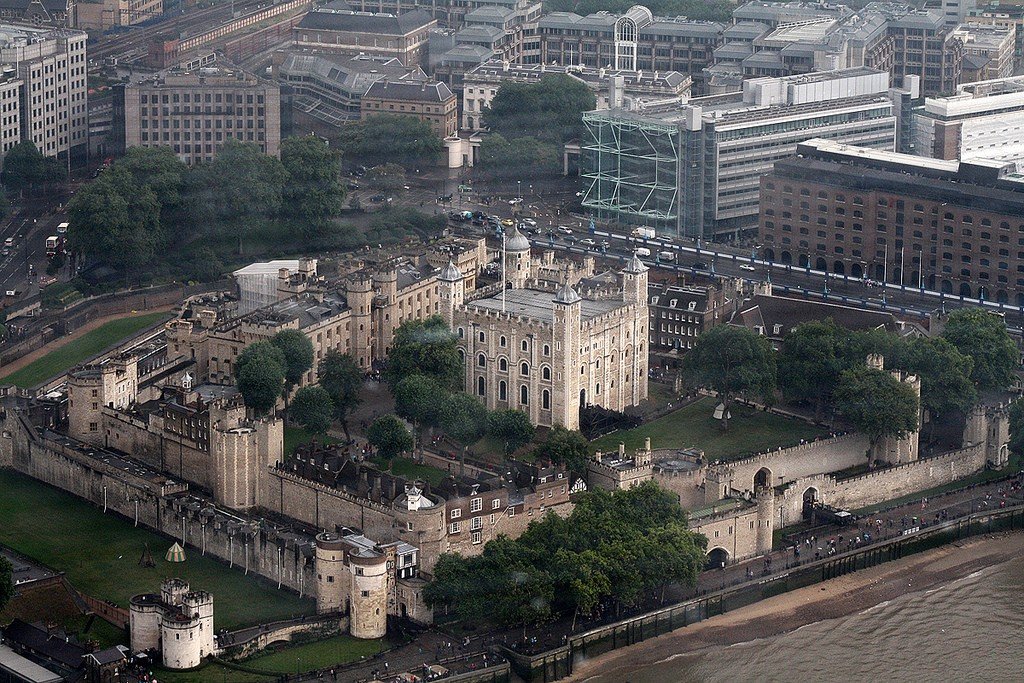
The Tower of London has become a symbol not only of London, but of the whole of Great Britain. It occupies a special place in British history, so now the Tower is one of the most visited architectural and historical sights of the world.
In essence, the Tower is a fortress. It stands on the north bank of the Thames, is one of England’s oldest buildings and the historical center of London. The history of this fortress is variegated: it was originally built as a defensive castle, and then it served as a zoo, and a mint, and an arsenal, and a prison, and an observatory, and a repository of royal treasures.

Tower History

The Tower was built in 1078, and in 1190 the first prisoner was imprisoned in a fortress. In this prison for high-ranking people and monarchs, only 7 executions were carried out, among the victims of Henry VIII's wife, Anne Boleyn and Catherine Howard, as well as "Queen of Nine Days" Jane Gray. From the first years of its existence, the Tower began to overgrow with all sorts of rumors and legends, sometimes very sinister. Some of them can be heard during excursions to this famous fortress.
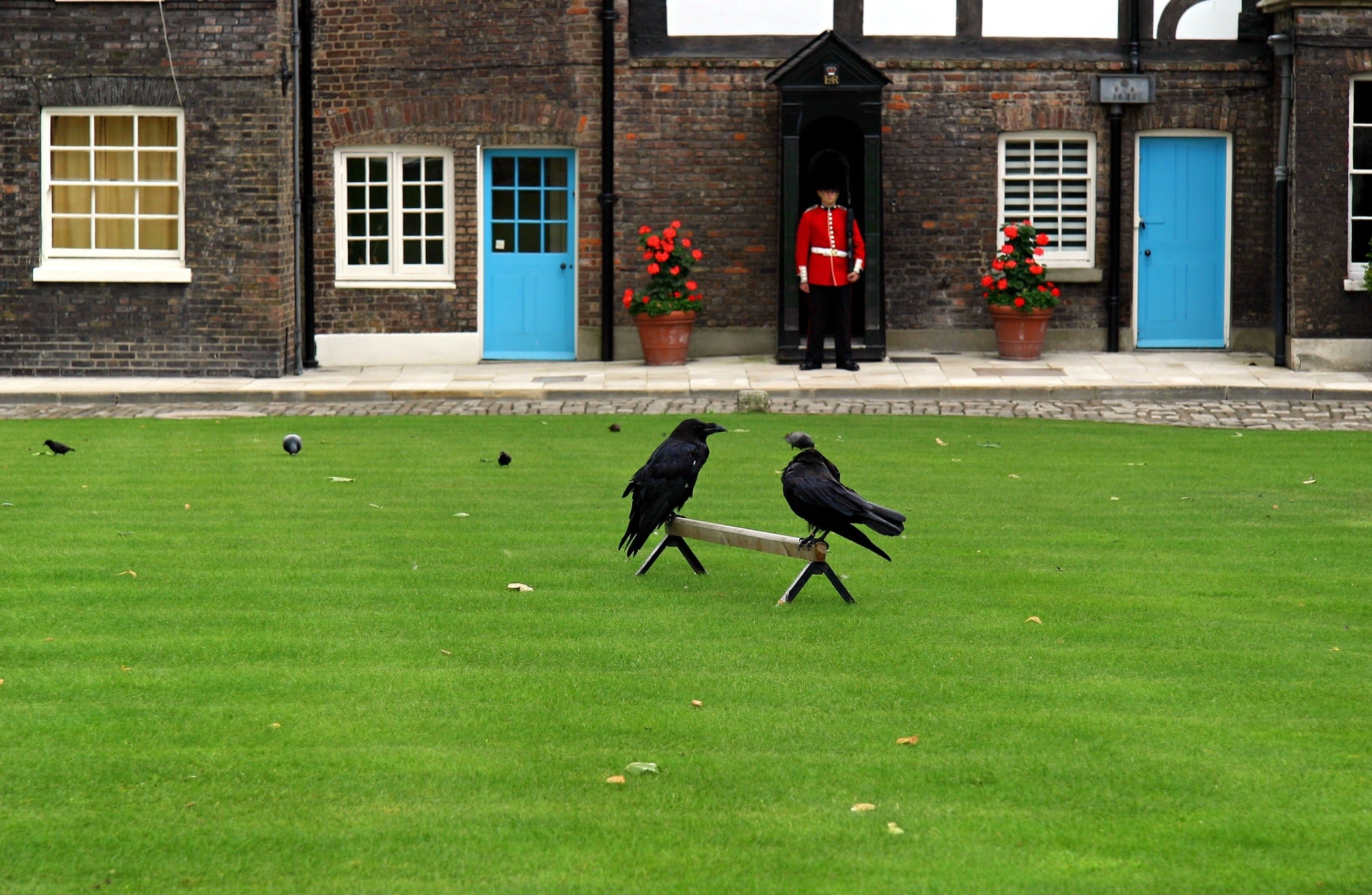
Today, the Tower of London looks almost the same as in the 11th century. Its main purpose is a museum with a rich collection and an armory; the treasures of the British crown are kept there. Officially, the fortress continues to be considered one of the royal residences. There are several private apartments where the staff and sometimes distinguished guests live. The Tower offers guided tours, where guides are beefeaters - the English guards. They are dressed in dark blue uniforms of the Victorian era, and on holiday dates - in luxurious Tudor costumes, which causes additional interest in the fortress among tourists.


This castle construction was completed in 1100. Although the King and Queen often stay in this castle, but the castle’s main function is as a stronghold and refuge. The main residence ofthe King and Queen are the Palace of Westminster that more luxurious. In the reign of Richard the Lionheart, the castle is undergoing a lot of expansion to further strengthen its defenses, including building a moat 7.5 meters with a depth of 3.4 meters outside the castle. Because at this time, King Richard more to flee the country to participate in the Crusades, the castle, he handed over to the chancellor, William Longchamp. Tower of London is located in the London Borough of Tower Hamlets. 

Events in the Tower

Tower Of London PoppiesIn addition to the traditional inspection of exhibits and interiors, you can also have fun in the Tower: for example, from December 27 to December 31, New Year is celebrated in medieval costumes here. Tourists are met by King Richard III, knights and minstrels. Even if you can not skate, do not miss the opportunity to have fun at the Tower rink. People come here in the morning, as a fitness at the beginning of the day, and in the evening, when they want romance: the fortress is highlighted with lights that are reflected in the ice.

Power pets


In 1235, Henry III (1216-72) was delighted to be presented with three 'leopards' (probably lions but referred to as leopards in the heraldry on the king's shield) by the Holy Roman Emperor Frederick II. These inspired the King to start a zoo at the Tower. Over time the collection of animals grew: the lions were joined by a polar bear in 1252 and an African elephant in 1255. Edward I (1239-1307) created a permanent new home for the Menagerie at the western entrance to the Tower, in what became known as the Lion Tower. The terrifying sounds and smells of the animals must have both impressed and intimidated visitors. By 1622, the collection had been extended to include three eagles, two pumas, a tiger and a jackal, as well as more lions and leopards, which were the main attractions. In 1826 the Constable of the Tower, the Duke of Wellington, dispatched 150 of the beasts to a new home in Regent’s Park.
Ravens of the Tower of London

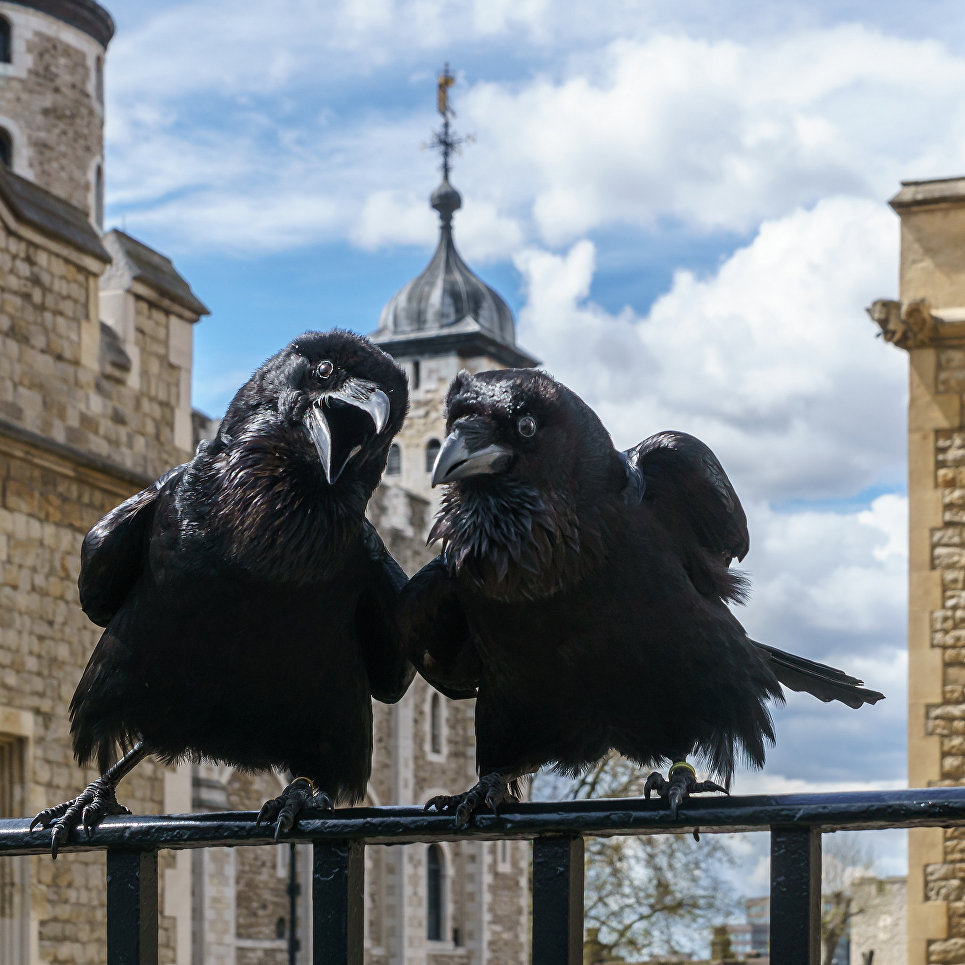
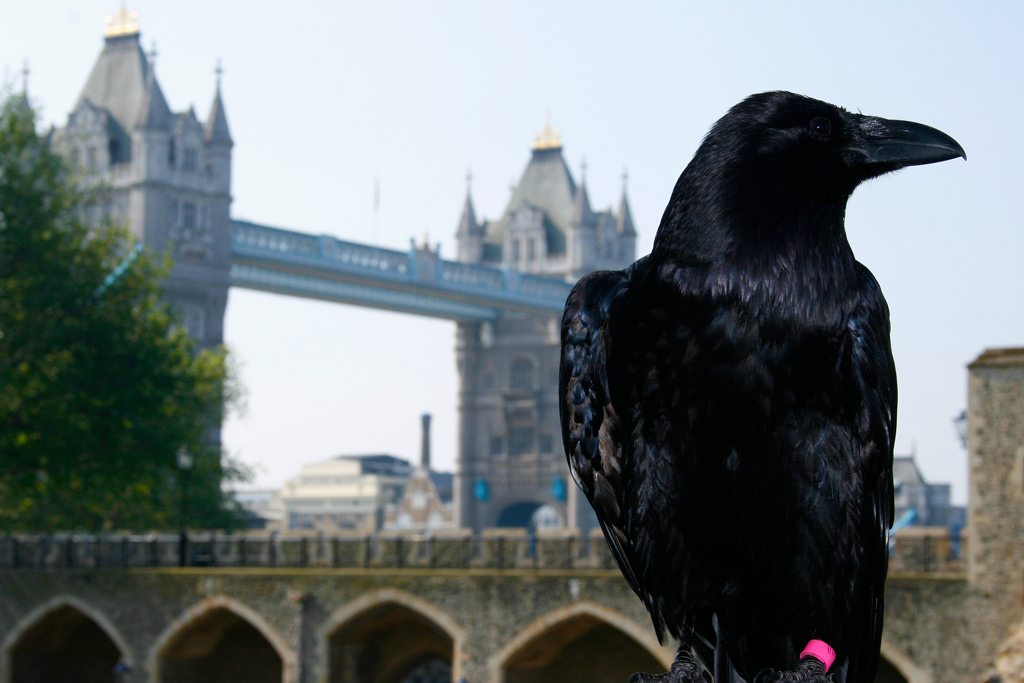
The Ravens of the Tower of London is a black raven population that traditionally lives in the Royal Tower of London and has a symbolic meaning for Britain. Their small population is on state support, and they are being cared for by a specially authorized member of the ceremonial youmen guardian of the Tower, Ravenmaster.
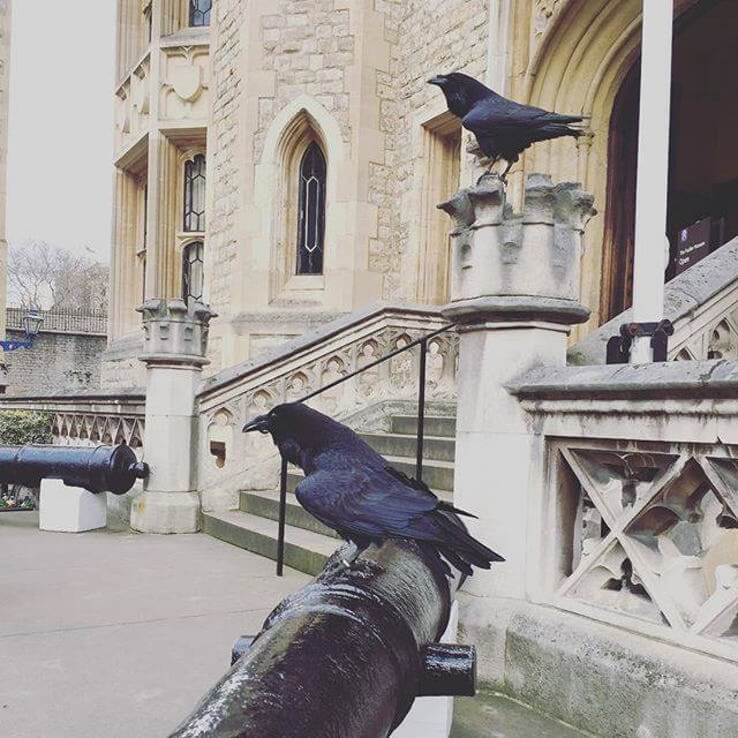
It is believed that Charles II ordered to keep at least six crows in the Tower, although the number of birds varied. So, as a result of the Nazi bombing of London and the wartime fodder, the population was reduced to one bird, and Prime Minister Winston Churchill ordered it to be filled.
The names of the current Ravens:
  • Marley
  • Erin
  • Merlin
  • Baldrick
  • Munin
  • Thor
  • Branwen (female, now breeds according to the population conservation program)
  • Hugine
  • Gwyllum


These ravens are named after the Scandinavian and Celtic gods and mythological characters. The ravens are individually recognized by the ribbons of a particular color attached to the paw. It is believed that if the ravens fly away from the Tower, the Tower and the British Empire will fall. Therefore, according to the old custom, their flight feathers on the wings are periodically cut, this is a painless procedure. The oldest raven in the history  is Jim Crow, who lived to old age - 44 years.
The poultry diet consists of 6 ounces of raw meat and of dry bird food dipped in blood per day. Once a week they are fed with eggs and sometimes with a rabbit with unwrapped skin, which is good for their health. Raven Thor is a great imitator of sounds. He is able to accurately reproduce intonational words of the caretaker.

вторник, 27 ноября 2018 г.


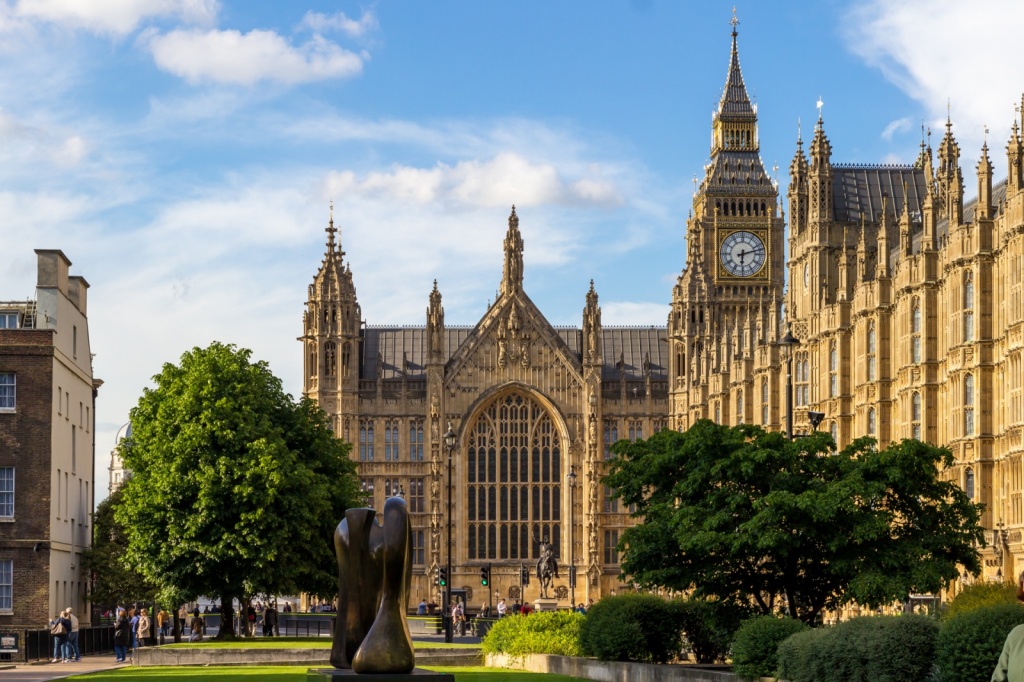
The Palace of Westminster is the meeting place of the House of Commons and the House of Lords, the two houses of the Parliament of the United Kingdom. Commonly known as the Houses of Parliament after its occupants, the Palace lies on the north bank of the River Thames in the City of Westminster, in central London, England.
Initially, until 1529, it served as the capital residence of the English kings. After the fire on October 16, 1834, the Palace was rebuilt according to the neo-Gothic project of Charles Barry OI U. N. Pugina. From the medieval Palace of Westminster left the reception hall (1097), the seat of the courts of Westminster, and the Tower of jewels (built to hold the Treasury of Edward III). At the beginning of the reign of Henry VIII, and in 1512, in the Royal part of the Palace there was a fire. In 1534, Henry VIII Acquired cardinal Thomas Wolsidvorets, renamed it Whitehall and made it his main residence. Since that time, the Palace of Westminster became the Parliament building. An Important ceremony took place the Painted chamber, in the House of lords was going to Queen's House (Queen's house), then, with the increase in the number of peers in the XVIII century, in the larger White chamber (White chamber). Since 1547 the house of Commons has gathered in the chapel of St. Stephen. In the XVIII and XIX centuries the Palace was updated several times, in 1799-1801 years under.


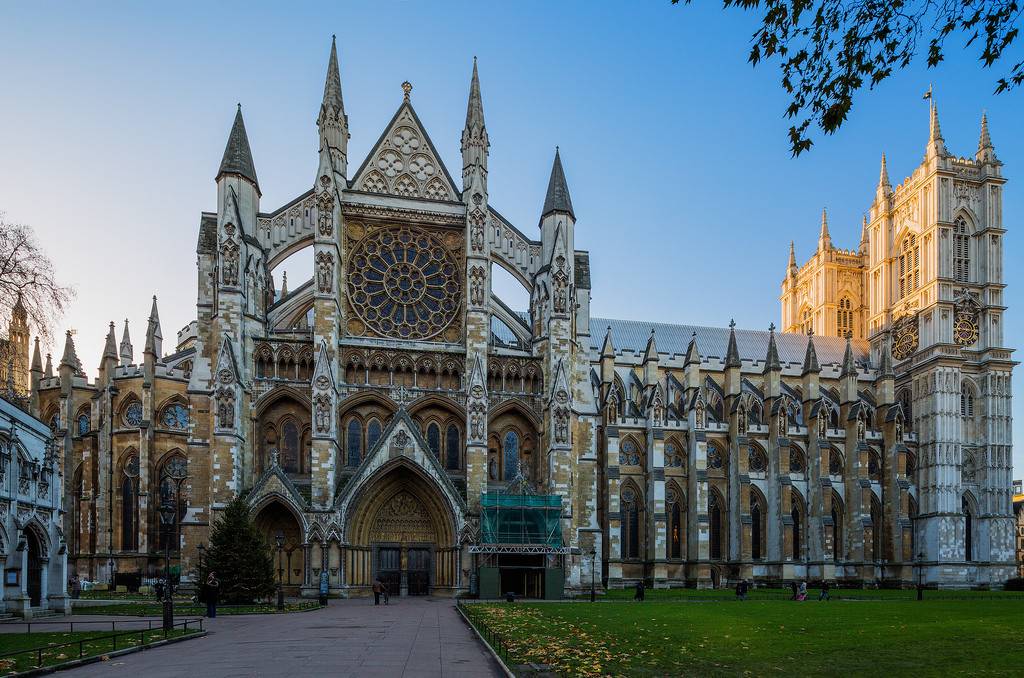
Westminster Abbey was built intermittently from 1245 to 1745, although the first mention of the Church on this site belong to VII-X centuries. The traditional place of coronation and burial of the monarchs of great Britain. Together with the nearby Palace of Westminster and the Church of St. Margaret, the Abbey was designated a world heritage site in 1987. The main building of the Church has the shape of a cross, or rather, is a Church with a transept 
The main entrance to the Church is a large Northern door, through which visitors enter the Northern transept. From there, turn left and find yourself in the Eastern part of the Church, deambulatorio where there are several chapels (or chapels), the largest of these is Notre-Dame chapel of Henry VII. Most of the southern transept is occupied by the poets ' Corner; there is also a large round rosette window, designed by sir James Thornhill, which depicts the eleven apostles. Construction of the modern non-Westminster Abbey lasted from 1376 to 1517, most of the work was carried out under the direction of architect Henry Yevel. Its design has been applied to the flying buttresses (exterior arches), which allowed to raise the roof of the nave to a height of 31 meters, the highest nave in England.
One of the most recognizable elements of the design of the nave — stained glass window in the Western window of William price, which was installed in 1735. It depicts Abraham, Isaac, James, and 14 prophets, with the coats of arms of king Sabert, Elizabeth I, George II, rector of Wilcox and the city of Westminster beneath them. Under the stained glass window (since 1920) is the tomb of the Unknown soldier, dedicated to those killed in the First world war, to her lay wreaths all the heads of state, making an official visit to the UK. In 1722-45 years was erected the West tower of the Abbey under the guidance of architect Nicholas Hawksmoor and according to the project Christopher Wren. In the XIX century the Abbey was restored by architect George Gilbert Scott. Westminster Abbey suffered greatly during the second world war, most severely during the bombing on the night of 10 to 11 may 1941, when the roof caught fire. After the war was restored.

среда, 7 ноября 2018 г.


Appendectomy is the surgical removal of the appendix when an infection has made it inflamed and swollen. This infection, called appendicitis, is considered an emergency because it can be life-threatening if it's not treated — the appendix occasionally bursts less than a day after symptoms start. So it's very important to have it removed as soon as possible.
Fortunately, appendectomy is a common procedure and complications are rare. And if appendicitis is promptly diagnosed and an appendectomy is performed, most kids recover quickly and with little difficulty.
Still, it helps to know some of the basics so you can feel confident about what is happening and support your child. The more prepared, calm, and reassuring you are about the anesthesia and surgery, the easier the experience will probably be for both of you.

About Appendicitis

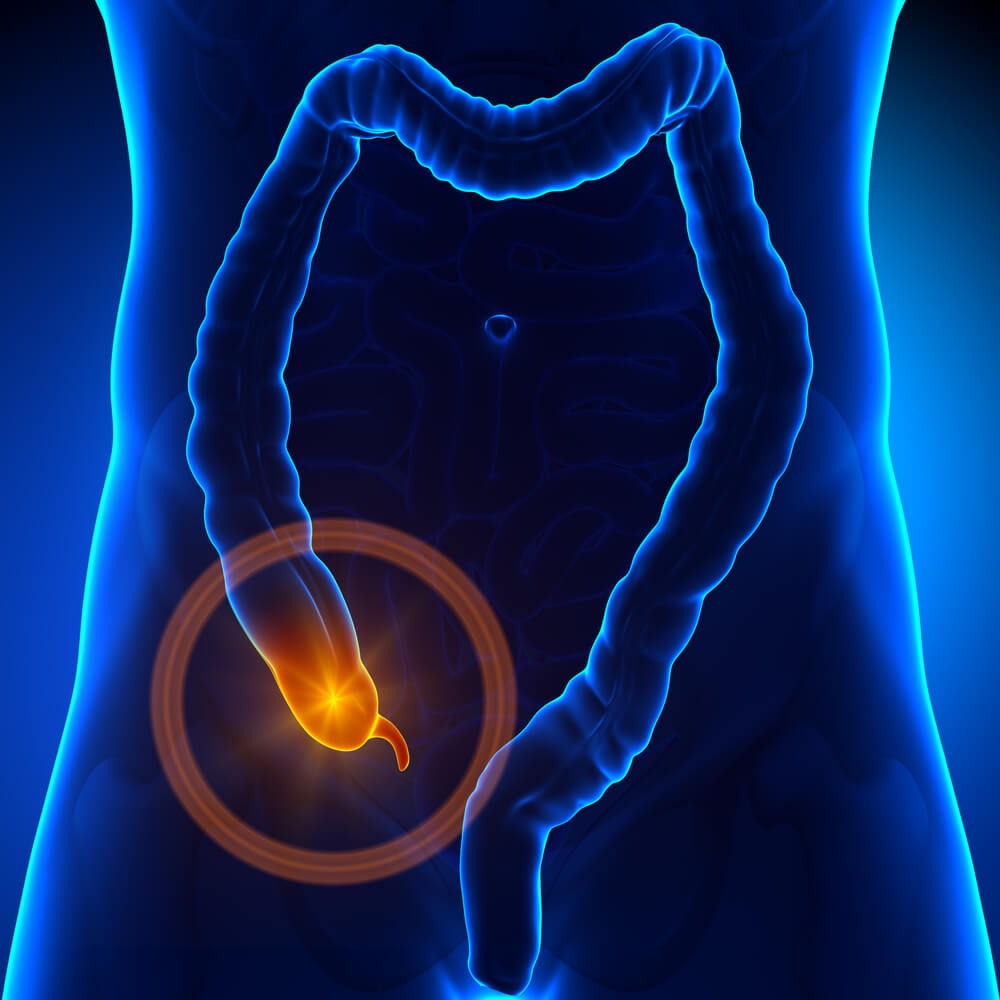
Located in the abdomen, the appendix is a small organ that resembles a worm. One end of the appendix is closed and the other opens into the large intestine, the organ that absorbs water from waste (or stool) and moves it out of the body through the anus. Experts don't completely understand what the appendix does, but most agree that it's not important to a person's health.
appendicitis_revised2010.gif

Causes

Doctors aren’t always exactly sure what causes appendicitis. Because the appendix is so close to the large intestine, it can become clogged with stool and bacteria. Other times, mucus produced by the appendix can thicken and cause a blockage. In both cases, once the opening to the appendix is congested, it can become inflamed and swollen. Bacteria inside the appendix can multiply and cause appendicitis.

Signs and Symptoms

Appendicitis can cause sudden pain in the middle of the abdomen, usually concentrated around the bellybutton. The pain often moves to the lower right part of the abdomen. At first, the pain might come and go, but then it becomes persistent and sharp.
Appendicitis also can cause:
  • loss of appetite
  • fever
  • nausea
  • vomiting
  • diarrhea
  • sometimes painful or frequent urination
If the appendix bursts, a child can develop a fever as high as 104º Fahrenheit (40º Celsius), and pain will move throughout the abdominal area.

вторник, 6 ноября 2018 г.

Nearly 28 percent of the country's population cosists of elderly people. And if you want it or not you have to have contacts with them.
To be honest I don't have a lot of contacts with elderly people. I don't really like to talk to elderly people as usually they are old-fashioned, especally in our town or country - they can't agree with something new and will judge you for the choice that's not the same with the others. Mostly elderly people can't admit their mistakes or that they are not right. It makes me very angry as I'm stubborn but I know that I can be wrong and they are not. Also they likely to take their age as the case of their right but not the age makes people wise or skilled.
I also don't have a lot of contacts with elderly people as I don't meet a lot of them. I don't have grandfathers and I have only one grandmother but she's ill and I haven't seen her for months. My mother socialises with our neighbours and they often visit our house. I sure they hate me, as I don't like to agree with somebody only because they're older than me. I'm sure they hate it when I arguing with them.
The other thing elderly people make is treat  younger people like they are children. When somebody older than me tells me that I "will understand it when I grow up" I want to turn round and go away. It's not how it works! Younger people understand a lot of thing too! For example, I had blue hair and all the elder people told me that I would regret about it in future, but I don't understand why do I have to regret about it? I wanted it and I did it. It has been almost 4 years and I still paint my hair in other beautiful colours. Especially it sounds weird from the people who made such thing when they were young and they don't really regret about it now.
Are elderly peole treated well in my country? No, they are not. I can take as the example their benefit. How I know it is   less than poverty line. How do they have to live with such a small benefit? They have been working for 40 or 50 years and they are given only 10 thousand rubles. Now our goverment issue the law about pensionable age. Only people after their 65 years can be given their benefit. But our average longevity is nearly 70 years. It means that when you have been working for 40 years to be given the benefit for only 5 years. I think it is unfair.
The country must take care of their old people. Every person sooner or later will become an old man (only if he or she doesn't die earlier) and it will be unpleasant to be treated like that.